Showing posts with label short sale. Show all posts

Monday, April 29, 2013

Short Sale Question: Who Owns the Loan?

by Brandon Brittingham on April 29, 2013

The short sale process can be very complex. Every bank and investor has a slightly different program and set of guidelines they follow. Since each investor has different rules and guidelines, it can help you considerably to find out who the investor is before starting the process.
Whether you are a homeowner in need of help with a short sale or an agent trying to help a homeowner, one of the best things you can do is to understand the situation you are getting into. A key piece of this short sale puzzle is finding out who actually “owns” the loan not just who services the loan.

Understanding the Back-end Process

To understand short sales, you need a basic knowledge of the back-end process of the mortgage market.  A few years ago, when the market was booming, mortgages would be originated by a servicer such as Wells Fargo and then sold between the big mortgage investors like Fannie Mae and Freddie Mac. Today, in most cases, you are dealing with a servicer like Wells Fargo or Bank of America that “service” the loan but do not actually own the loan. The bank who originally lent the money is unlikely to still own it unless it is a small community or regional bank. In fact, Bank of America and Wells, the two biggest servicers, only own about 8-10% of their portfolio. The rest of their inventory is made up of loans they service for other investors. The investor guidelines ultimately determine whether to provide relocation money on the short sale, if there will be a debt release on the sale and also define a slew of other details.

How to Find Out Who Owns Your Loan

1.) First, you can look on your mortgage statement. If the loan is FHA backed it will have an FHA MI line-item on your statement that usually says” FHA insurance”. You can also look at your original Deed of Trust, as it will have your FHA case number on it. If you want to see if your property is owned by Fannie Mae or Freddie Mac, you can also find it directly under the loan look-up tools available on their websites. Here are the links:
2.) If your loan is not owned by one of these three entities you can ask the servicer of the loan who owns it – though they will not always tell you verbally. You could also research it by getting the title pulled. Chain of title will not always be conclusive either. However, in many cases, it has helped make it easier to “track” down the investor.  In some cases, it could also be owned by the servicer; Wells Fargo could be the servicer and also the investor on the loan. This is called a “portfolio” loan. You can also request for your servicer to disclose in writing who the investor is if they will not verbally disclose that information. This is called a “qualified written request, or QWR”.  On its website, the U.S. Department of Urban Housing and Development (HUD) provides a sample QWR and gives a brief explanation of this process.
3.) Another way to find out who owns your loan is through the Mortgage Electronic Registration System, Inc. (MERS). MERS is a company that was created by the mortgage banking industry. It maintains a database that tracks mortgages for its members as they are transferred from bank to bank. You can look up a loan to see if they have the investor information here.  

Different Guidelines Used by Different Investors

The three biggest mortgage investors in the country are Fannie Mae, Freddie Mac, and FHA. VA is another big investor but does not have a portfolio nearly as big as the other three mentioned. With the exception of FHA/VA (because they insure their own loans), there also could be a mortgage insurer who provided insurance on the loan. The reason this is important to understand is that, when there is a servicer, investor and mortgage insurer on the loan, all three of them have to agree to the terms of the short sale. It is very important to find out from the very beginning of the process the identity of the actual end-investor on the loan. An FHA-backed mortgage has a totally different process for a short sale compared to a Fannie Mae loan.
Every investor has a different set of guidelines they set for short sales and foreclosure procedures so you have to understand that ultimately it is up to the end investor-not the servicer. The servicer has their own guidelines but they do not make the final decision. It is important that you know who the investor is because there will be times when you may have an issue with a servicer and you have to go to the investor to get it resolved.
There have been many transactions where the servicer and I disagreed on a particular issue and I went to the investor and got the approval.  So make sure going in to this situation you know everyone involved and go to the servicer’s and the investor’s website to get familiar with their guidelines and any specific documents they may require.
Attention Agents:
On your third party authorization letter (the letter that gives you permission to speak to the bank on the homeowners’ behalf) always put the investor as well as the servicer so that if later you have to reach out to the investor you already have permission from the seller to do so. This also puts the servicer on alert that you know what you are doing and have already researched finding out who the end-investor is.

If your family is going through financial hardship, you are not alone. Many families have gone through this process and made it out. We have experience on dealing with short sales and are here to assist you. Feel free to contact us for a private appointment to discuss your options before it is too late.

Noemi Cardoso
William Raveis Real Estate
911 Main Rd, Westport MA 02790
Cell: 508-558-1945
www.DistinctiveHomes-NE.com
Noemi.Cardoso@Raveis.com
Fluent in Portuguese and English
 

Wednesday, April 10, 2013

CoreLogic Reports 54,000 Completed Foreclosures in February


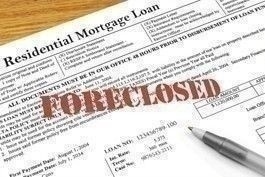
foreclosure_paperworkCoreLogic® recently released its National Foreclosure Report for February, which provides data on completed U.S. foreclosures and the overall foreclosure inventory. According to CoreLogic, there were 54,000 completed foreclosures in the U.S. in February 2013, down from 67,000 in February 2012, a year-over-year decrease of 19 percent. On a month-over-month basis, completed foreclosures fell from 58,000* in January 2013 to the February level of 54,000, a decrease of 7 percent.
As a basis of comparison, prior to the decline in the housing market in 2007, completed foreclosures averaged 21,000 per month nationwide between 2000 and 2006. Completed foreclosures are an indication of the total number of homes actually lost to foreclosure. Since the financial crisis began in September 2008, there have been approximately 4.2 million completed foreclosures across the country.
Approximately 1.2 million homes were in some stage of foreclosure in the U.S., known as the foreclosure inventory, as of February 2013 compared to 1.5 million in February 2012, a decrease of 21 percent. The foreclosure inventory as of February 2013 represented 2.8 percent of all homes with a mortgage compared to 3.5 percent in February 2012. This was the 16th consecutive month with a year-over-year decline. Month over month, the foreclosure inventory was down 1.8 percent from January 2013 to February 2013.
“February’s 54,000 completed foreclosures is the lowest level nationally since September 2007, with most major metropolitan areas experiencing improvements,” says Dr. Mark Fleming, chief economist for CoreLogic. “Even the major Florida markets are benefiting with the foreclosure inventories falling the fastest in major metropolitan areas, although from a very high level.”
“We continue to see a declining trend in foreclosure activity, with major markets leading the way,” says Anand Nallathambi, president and CEO of CoreLogic. “The drop in delinquencies and foreclosure starts will help support a resurgence in the home purchase market this year and next.”
Highlights as of February 2013:
• The five states with the highest number of completed foreclosures for the 12 months ending in February 2013 were: Florida (95,000),California (90,000), Michigan (73,000), Texas (57,000) and Georgia (49,000).These five states account for almost half of all completed foreclosures nationally.
• The five states with the lowest number of completed foreclosures for the 12 months ending in February 2013 were: District of Columbia (96), Hawaii (469), North Dakota (482), Maine (542) and West Virginia (588).
• The five states with the highest foreclosure inventory as a percentage of all mortgaged homes were: Florida (9.9 percent), New Jersey (7.2 percent), New York (5.0 percent), Nevada (4.6 percent) and Illinois (4.5 percent).
• The five states with the lowest foreclosure inventory as a percentage of all mortgaged homes were: Wyoming (0.5 percent), Alaska (0.6 percent), North Dakota (0.7 percent), Nebraska (0.8 percent) and Montana (0.9 percent).
For more information, visit www.corelogic.com.

Saturday, October 13, 2012

Short Sale vs Foreclosure – 10 Common Myths Busted

by Brandon Brittingham

It’s likely you’ve heard the term “short sale” thrown around quite a bit. But what, exactly, is a short sale?

A short sale is when a bank agrees to accept less than the total amount owed on a mortgage to avoid having to foreclose on the property. This is not a new practice; banks have been doing short sales for years. Only recently, due to the current state of the housing market and economy, has this process become a part of the public consciousness.

To be eligible for a short sale you first have to qualify!

To qualify for a short sale:
  • Your house must be worth less than you owe on it.
  • You must be able to prove that you are the victim of a true financial hardship, such as a decrease in wages, job loss, or medical condition that has altered your ability to make the same income as when the loan was originated. Divorce, estate situations, etc… also qualify.
Now that you have a basic understanding of what a short sale is, there are some huge misconceptions when it comes to a short sale vs. a foreclosure. We take the most common myths surrounding both short sales and foreclosures and give a brief explanation. LET’S BUST SOME MYTHS!!

1.) If you let your home go to foreclosure you are done with the situation and you can walk away with a clean slate. The reality is that this couldn’t be any farther from the truth in most situations. You could end up with an IRS tax liability and still owing the bank money. Let me explain. Please keep in mind that if your property does go into foreclosure you may be liable for the difference of what is owed on the property versus what is sells for at auction, in the form of a deficiency balance! Please note this is state specific and in most states you will be liable for the shortfall, but in some states the bank may not always be able to pursue the debt. Check your state law as it varies widely from state to state.

Here is an example of how a deficiency balance works

If you owe $200,000 on the property and it sells at auction for $150,000, you could be liable for the $50,000 difference if your state law allows it.

Not only could you be liable for the difference to the bank, but in some situations you could also be liable to the IRS! Although there are exemptions (mostly for principle residences) under the Mortgage Debt Forgiveness Act, there are times when you could be taxed on both a short sale and a foreclosure, even in a principle residence situation. Since the tax code on this is a little complicated and I am not a CPA, I advise always talking to a CPA when in this situation as you are weighing your options. Hard to believe? Well, believe it or not, the IRS counts the difference between the sale and the charged off debt as a “gain” on your taxes. That’s right-you lost money and it’s counted as a gain! (I didn’t make that rule, that’s a wonderful brainchild of the IRS). Banks and the IRS can go as far as attaching your wages. Not to mention if you let your home go to foreclosure you will have that on your credit, as well.

Guess What? A short sale can alleviate your liability to the bank, in most situations. There are also exceptions to this, but in most cases banks are releasing homeowners from the deficiency balance on a short sale.

2.) There are no options to avoid foreclosure. Now more than ever, there are options to avoid foreclosure. Besides a short sale, loan modifications along with deed in lieu are also examples of the many options. In most cases (but not all) a short sale is the best option. Either way, there are more options today than there have ever been to avoid foreclosure.

3.) Banks do not want to participate in a short sale, or, it is too hard to qualify for a short sale. Banks would rather perform a short sale than a foreclosure any day. A foreclosure takes a long time and creates a huge expense for the banks; a short sale saves both time and money. Banks have more foreclosure inventory than ever before, and certainly do not want any more. Banks more than ever welcome short sales. Qualifying for a short sale is easier than you think, you need to have a true financial hardship, or a change in your finances and your house has to be worth less than what you owe on it. Not only do consumers, but banks also now have government incentive to participate in short sales.

4.) Short sales are not that common. At this present time, short sales range from 10-50 % of sales in various markets and it is predicted that in 2012 we will have more short sales than any other year, to date. Due to economic changes in the last few years, this is something that is affecting millions of Americans. Short sales are in every market, and are not just limited to any particular income class. This has affected everyone from all facets of life. A short sale should be looked at as a helpful tool, not a negative stigma.That is why the government is offering programs that actually pay consumers to participate in short sales. It is not just affecting one community; it is affecting communities and consumers across the nation.

5.) The short sale process is too difficult and they often get denied. Though the short sale process is time consuming; it is not as difficult as the media would have you believe. The problem is that most short sales are denied because of a misunderstanding of the process. It is true that if the short sale process is not followed correctly there is a good chance of getting denied. An experienced agent knows how to avoid this. Short sales require a lot of experience, and a special skill set. If you are looking to go the option of a short sale make sure your agent is skilled and experienced in this area.

6.) Short sales will cost me money out of pocket. A short sale should not cost you any out of pocket money. In fact, you could get between $3000-up to $30,000 to participate in a short sale. In many ways, a short sale may put you in a better financial position than prior to the short sale. Almost every short sale program now has some type of financial incentive for the home owner, as long as it is a principle residence, and we are even seeing relocation money being paid on some investment/second homes. As a seller of a property you should never have to pay for any short sale cost upfront to any professional service. Realtors charge a commission that is paid for by the bank. In most communities there are also non-profits and HUD counselors who can help you with foreclosure prevention options for free. The only potential cost you could incur is if the bank would not release you from a deficiency balance in the short sale, which is happening less and less now.

7.) If I am behind on my payments, I can perform a short sale any time. The farther you get behind on your payments, the harder it is to get a short sale approved. The closer a property gets to a foreclosure the harder it is to convince the bank to perform a short sale. As they get closer to a foreclosure sale more money is spent, thus deterring them from doing a short sale. If you think you need to perform a short sale, time is of the essence; the sooner you start the process, the better. Waiting too long can trigger the ramifications of a foreclosure, losing the ability to do a short sale as a viable option.

8.) I have already been sent a foreclosure notice so I can’t perform a short sale. For the most part just because you received a foreclosure notice or notice of default it does not mean that you do not have time to perform a short sale. The timeline and specifics do vary from state to state, but having done short sales all over the country, I have seen banks postpone a foreclosure to work a short sale option as close as 30 days prior to the scheduled foreclosure auction, but the longer you wait the less chance you have. If you have received a legal foreclosure notice, please reach out to a professional right away. The longer you wait, and the closer you get to foreclosure, the fewer options you have. If you have received a notice to foreclose this means the bank is filing paperwork and starting the process to take legal action to repossess the house. You still have time at this point to prevent foreclosure, but do not hesitate! The closer you get to the foreclosure date the harder it becomes to negotiate with the bank for whichever option you choose.

9.) I was denied for a loan modification, so I know I will get denied for a short sale. Short sales and loan modifications are handled by two separate departments at the bank. These processes are totally different in approval and denial. If you got denied for a modification you can still apply for a short sale; in some cases you can get a short sale approved faster than a loan modification, as some loan modifications are denied because they cannot reduce the loan low enough based on the consumers income.

10.) If I go through a short sale I cannot buy another house for a long time. The time to buy another house depends on your entire credit picture and can vary from 12-24 months. There are even a few FHA programs that allow for a purchase sooner than that. I have worked with clients who went through a short sale and bought another house in less than 12 months.

These are just a few of the common myths surrounding short sales and foreclosure. With the options available today, no homeowner should ever have to go through foreclosure, and hopefully this information can help a few more homeowners think twice before walking away from their home not realizing the possible long term ramifications a foreclosure can have.
 
 About The Author
 
Brandon Brittingham is considered a leading national resource on foreclosure prevention and short sales. Brandon has been involved in over 400 short sales, and is the co-author of the SSC (Short Sale Certified) designation. Brandon has trained over 2000 real estate agents nationwide on short sales and how to help homeowners prevent foreclosure. He has worked with several major lenders to help them develop processes to streamline their short sale and loan modification processes, and has been a Regional Top producer in his area for the last three years and was recently acknowledged by Realty Alliance for being in the top 5% of realtors in North America.

If you are thinking of buying a home in Westport MA visit www.DistinctiveHomes-NE.com for a free list of homes for sale in Westport MA.

If you are thinking of selling your home contact me for a FREE Current Market Analysis and to learn about our Market Plan to get your home SOLD!


Noemi Cardoso
RE/MAX Welcome Home
Cell: 508-558-1945
Home Office (Westport) 774-264-9085
www.DistinctiveHomes-NE.com
noemi@DistinctiveHomes-NE.com

Thursday, October 4, 2012

The Mortgage Forgiveness Act: Will It Be Extended?

by The KCM Crew on October 3, 2012
    As the year winds down, we are getting more and more inquiries about the Mortgage Forgiveness Debt Relief Act of 2007 and whether or not it will be extended past its original expiration date of December 31, 2012. This is important as people who are selling their home through a short sale may be faced with a tax liability if they don’t close by the aforementioned date.
Here is the way the IRS explains the tax liability:
“If you borrow money from a commercial lender and the lender later cancels or forgives the debt, you may have to include the cancelled amount in income for tax purposes, depending on the circumstances. When you borrowed the money you were not required to include the loan proceeds in income because you had an obligation to repay the lender. When that obligation is subsequently forgiven, the amount you received as loan proceeds is normally reportable as income because you no longer have an obligation to repay the lender. The lender is usually required to report the amount of the canceled debt to you and the IRS on a Form 1099-C, Cancellation of Debt.
Here’s a very simplified example. You borrow $10,000 and default on the loan after paying back $2,000. If the lender is unable to collect the remaining debt from you, there is a cancellation of debt of $8,000, which generally is taxable income to you.”

What does the Act accomplish?

Let’s go back to the IRS for the explanation:
“Normally, debt that is forgiven or cancelled by a lender must be included as income on your tax return and is taxable. But the Mortgage Forgiveness Debt Relief Act allows you to exclude certain cancelled debt on your principal residence from income. Debt reduced through mortgage restructuring, as well as mortgage debt forgiven in connection with a foreclosure, qualifies for the relief.”
(For more information on the ACT from the IRS, click here)
This relief also applies to most short sales. Therefore, the question of whether or not the Act will be extended is crucial for anyone considering selling their house through the short sale process.

Will the Act be extended past the end of the year?

No one knows for certain. Diana Olick of CNBC recently reported on the issue:
“So what is the possibility of congress extending the tax relief? One Hill-watcher puts it at 60-40. The Senate Finance Committee passed a package of tax extenders right before the recess, including a one year mortgage relief extension, but leadership in the House of Representatives has not figured out how it wants to handle these extenders. With the looming ‘fiscal cliff,’ tax cuts are an increasingly tough sell. This particular extension does have bipartisan support, but that doesn’t always mean passage in Congress, especially around a presidential election.”
Without knowing whether the Act will be extended, we suggest anyone considering selling via the short sale process do it now.

If you are thinking of buying a home in Westport MA visit www.DistinctiveHomes-NE.com for a free list of homes for sale in Westport MA.

If you are thinking of selling your home contact me for a FREE Current Market Analysis and to learn about our Market Plan to get your home SOLD!


Noemi Cardoso
RE/MAX Welcome Home
Cell: 508-558-1945
Home Office (Westport) 774-264-9085
www.DistinctiveHomes-NE.com
noemi@DistinctiveHomes-NE.com

Monday, July 30, 2012

Short Sale vs Foreclosure: The Children

by The KCM Crew on July 30, 2012
    This week, we have looked at the advantages of a short sale over a foreclosure from five different perspectives: Sellers’, Neighborhoods’, Banks’, Prices and the Children. – The KCM Crew

We were recently troubled by the findings of a research paper authored by Julia Isaacs of the Brookings Institute for the organization First Focus which was titled The Ongoing Impact of Foreclosures on Children. In the report, Ms. Isaacs quantified the number of children that have been impacted:
  • 2.3 million children have already lost their homes to foreclosure
  • 3 million additional children are at risk of losing their home
She also noted the four ways foreclosures may affect children negatively:
  1. Families receiving foreclosure notices are much more likely to move than other families. Children who move frequently do less well in school.
  2. Homeowners receiving a foreclosure notice are under a lot of financial and psychological stress. Parents under financial distress sometimes engage in harsher and less supportive parenting. This can lead to negative behaviors on the part of children, making it harder for them to interact well with peers and in school.
  3. Foreclosures have a negative impact on physical as well as mental health, with studies finding higher rates of non-elective visits to emergency rooms and hospitals in ZIP codes with the highest foreclosure rates.
  4. Children living in or near foreclosed homes may suffer the consequences of living in neighborhoods with more vacant houses, higher crime rates, lower social cohesion, and a lower tax base.
The Official Journal of the American Academy of Pediatrics just published a report on the impact of the housing crises on child abuse. Their conclusion:
“Multicenter hospital data show an increase in pediatric admissions for physical abuse and high-risk traumatic brain injuries (TBI) during a time of declining all-cause injury rate. Abuse and high-risk TBI admission rates increased in relationship to local mortgage delinquency and foreclosure trends.”
If you find that one of your clients is at risk of foreclosure, explain their options. The new National Mortgage Settlement might give them a pathway to stay in their home.

You can get information on the opportunities the settlement offers here.

However, if they have exhausted all their options and now must decide between a short sale and foreclosure, help them analyze what is the best decision for themselves and their families.
In most cases, a short sale will be the better option for them and their children as they will be able to have some control over the moving date and the move itself. This will create a level of dignity in the move that will alleviate some of the pressure on the parents and as a result lead to more effective parenting.

If you are seriously thinking of buying or selling, or just plain curious to see what’s happening in your area of interest, start your search at the best real estate website www.DistinctiveHomes-NE.com

Noemi Cardoso
RE/MAX Welcome Home
Serving Westport, Dartmouth, Fall River, MA
Little Compton, Tiverton, RI and surrounding towns.
www.DistinctiveHomes-NE.com

Friday, July 27, 2012

Short Sale vs Foreclosure: the Prices

by The KCM Crew on July 27, 2012 ·

This week, we are looking at the advantages of a short sale over a foreclosure from five different perspectives: Sellers’, Neighborhoods’, Banks’, Prices and the Children. – The KCM Crew
All distressed properties put downward pressure on prices. However, the impact of a short sale is nowhere as drastic as the impact of a foreclosure for two major reasons:
  1. A foreclosure, in most cases, leaves a vacant house in the neighborhood. Vacant, unmaintained homes have a negative impact on the value of other houses in the area.
  2. When a distressed property sells, it can then be used as a comparable sale in the appraisals of all other sales in the market including the appraisals of non-distressed properties. Since foreclosures sell for approximately 10% less than short sales, they do more damage on the appraisals of other homes.
A short sale impacts the values of other homes to a lesser degree than a foreclosure.

Tomorrow, we will look at the impact of a short sale compared to a foreclosure on children.

If you are seriously thinking of buying or selling, or just plain curious to see what’s happening in your area of interest, start your search at the best real estate website www.DistinctiveHomes-NE.com

Noemi Cardoso
RE/MAX Welcome Home
Serving Westport, Dartmouth, Fall River, MA
Little Compton, Tiverton, RI and surrounding towns.
www.DistinctiveHomes-NE.com

Tuesday, July 24, 2012

Short Sales vs Foreclosures: the Seller

by The KCM Crew on July 24, 2012 ·

This week, we are looking at the advantages of a short sale over a foreclosure from five different perspectives: the Sellers’, the Neighborhoods’, the Banks’, Prices and the Children. – The KCM Crew

Real estate professionals are handling an increasing number of distressed properties. Which is a better alternative for the seller – short sale or foreclosure? Here are the advantages of doing a short sale:

It allows a more dignified exit from the home.

In a foreclosure, an official eventually comes to the home and tells the occupants to leave – immediately. In a short sale, the seller knows the closing date and can prepare in advance for the move. In many cases, their neighbors, friends and family needn’t even know of their financial difficulties.

The seller could possibly avoid a deficiency judgment.

In almost all distressed sales, the bank can legally go after the seller for the difference between the loan amount and the selling price (known as a deficiency judgment). Most banks will release the seller from this obligation in a short sale process.

[Read full article...]

If you are seriously thinking of buying or selling, or just plain curious to see what’s happening in your area of interest, start your search at the best real estate website www.DistinctiveHomes-NE.com

Noemi Cardoso
RE/MAX Welcome Home
Serving Westport, Dartmouth, Fall River, MA
Little Compton, Tiverton, RI and surrounding towns.
www.DistinctiveHomes-NE.com

Wednesday, May 9, 2012

Short Sale vs Foreclosure – 10 Common Myths Busted

Posted: 09 May 2012 The KCM Crew


It’s likely you’ve heard the term“short sale” thrown around quite a bit. But what, exactly, is a short sale?

A short sale is when a bank agrees to accept less than the total amount owed on a mortgage to avoid having to foreclose on the property. This is not a new practice; banks have been doing short sales for years. Only recently, due to the current state of the housing market and economy, has this process become a part of the public consciousness.

To be eligible for a short sale you first have to qualify!

To qualify for a short sale:

§Your house must be worth less than you owe on it.

§You must be able to prove that you are the victim of a true financial hardship, such as a decrease in wages, job loss, or medical condition that has altered your ability to make the same income as when the loan was originated. Divorce, estate situations, etc… also qualify.

Now that you have a basic understanding of what a short sale is, there are some huge misconceptions when it comes to a short sale vs. a foreclosure. We take the most common myths surrounding both short sales and foreclosures and give a brief explanation. LET’S BUST SOME MYTHS!!

1.) If you let your home go to foreclosure you are done with the situation and you can walk away with a clean slate.  The reality is that this couldn’t be any farther from the truth in most situations. You could end up with an IRS tax liability and still owing the bank money. Let me explain. Please keep in mind that if your property does go into foreclosure you may be liable for the difference of what is owed on the property versus what is sells for at auction, in the form of a deficiency balance! Please note this is state specific and in most states you will be liable for the shortfall, but in some states the bank may not always be able to pursue the debt. Check your state law as it varies widely from state to state.

Here is an example of how a deficiency balance works 

If you owe $200,000 on the property and it sells at auction for $150,000, you could be liable for the $50,000 difference if your state law allows it.

Not only could you be liable for the difference to the bank, but in some situations you could also be liable to the IRS! Although there are exemptions (mostly for principle residences) under the Mortgage Debt Forgiveness Act, there are times when you could be taxed on both a short sale and a foreclosure, even in a principle residence situation. Since the tax code on this is a little complicated and I am not a CPA, I advise always talking to a CPA when in this situation as you are weighing your options. Hard to believe?  Well, believe it or not, the IRS counts the difference between the sale and the charged off debt as a “gain” on your taxes. That’s right-you lost money and it’s counted as a gain! (I didn’t make that rule, that’s a wonderful brainchild of the IRS). Banks and the IRS can go as far as attaching your wages. Not to mention if you let your home go to foreclosure you will have that on your credit, as well.

Guess What?  A short sale can alleviate your liability to the bank, in most situations. There are also exceptions to this, but in most cases banks are releasing homeowners from the deficiency balance on a short sale.

2.) There are no options to avoid foreclosure. Now more than ever, there are options to avoid foreclosure. Besides a short sale, loan modifications along with deed in lieu are also examples of the many options. In most cases (but not all) a short sale is the best option. Either way, there are more options today than there have ever been to avoid foreclosure.

3.) Banks do not want to participate in a short sale, or, it is too hard to qualify for a short sale. Banks would rather perform a short sale than a foreclosure any day. A foreclosure takes a long time and creates a huge expense for the banks; a short sale saves both time and money. Banks have more foreclosure inventory than ever before, and certainly do not want any more. Banks more than ever welcome short sales. Qualifying for a short sale is easier than you think, you need to have a true financial hardship, or a change in your finances and your house has to be worth less than what you owe on it. Not only do consumers, but banks also now have government incentive to participate in short sales.

4.) Short sales are not that common. At this present time, short sales range from 10-50 % of sales in various markets and it is predicted that in 2012 we will have more short sales than any other year, to date. Due to economic changes in the last few years, this is something that is affecting millions of Americans. Short sales are in every market, and are not just limited to any particular income class. This has affected everyone from all facets of life. A short sale should be looked at as a helpful tool, not a negative stigma.That is why the government is offering programs that actually pay consumers to participate in short sales. It is not just affecting one community; it is affecting communities and consumers across the nation.

5.) The short sale process is too difficult and they often get denied. Though the short sale process is time consuming; it is not as difficult as the media would have you believe. The problem is that most short sales are denied because of a misunderstanding of the process.  It is true that if the short sale process is not followed correctly there is a good chance of getting denied. An experienced agent knows how to avoid this. Short sales require a lot of experience, and a special skill set. If you are looking to go the option of a short sale make sure your agent is skilled and experienced in this area.

6.) Short sales will cost me money out of pocket.  A short sale should not cost you any out of pocket money. In fact, you could get between $3000-up to $30,000 to participate in a short sale. In many ways, a short sale may put you in a better financial position than prior to the short sale. Almost every short sale program now has some type of financial incentive for the home owner, as long as it is a principle residence, and we are even seeing relocation money being paid on some investment/second homes. As a seller of a property you should never have to pay for any short sale cost upfront to any professional service. Realtors charge a commission that is paid for by the bank. In most communities there are also non-profits and HUD counselors who can help you with foreclosure prevention options for free. The only potential cost you could incur is if the bank would not release you from a deficiency balance in the short sale, which is happening less and less now.

7.) If I am behind on my payments, I can perform a short sale any time. The farther you get behind on your payments, the harder it is to get a short sale approved. The closer a property gets to a foreclosure the harder it is to convince the bank to perform a short sale. As they get closer to a foreclosure sale more money is spent, thus deterring them from doing a short sale. If you think you need to perform a short sale, time is of the essence; the sooner you start the process, the better. Waiting too long can trigger the ramifications of a foreclosure, losing the ability to do a short sale as a viable option.

8.) I have already been sent a foreclosure notice so I can’t perform a short sale. For the most part just because you received a foreclosure notice or notice of default it does not mean that you do not have time to perform a short sale. The timeline and specifics do vary from state to state, but having done short sales all over the country, I have seen banks postpone a foreclosure to work a short sale option as close as 30 days prior to the scheduled foreclosure auction, but the longer you wait the less chance you have. If you have received a legal foreclosure notice, please reach out to a professional right away. The longer you wait, and the closer you get to foreclosure, the fewer options you have. If you have received a notice to foreclose this means the bank is filing paperwork and starting the process to take legal action to repossess the house. You still have time at this point to prevent foreclosure, but do not hesitate! The closer you get to the foreclosure date the harder it becomes to negotiate with the bank for whichever option you choose.

9.) I was denied for a loan modification, so I know I will get denied for a short sale.  Short sales and loan modifications are handled by two separate departments at the bank. These processes are totally different in approval and denial. If you got denied for a modification you can still apply for a short sale; in some cases you can get a short sale approved faster than a loan modification, as some loan modifications are denied because they cannot reduce the loan low enough based on the consumers income.

10.) If I go through a short sale I cannot buy another house for a long time. The time to buy another house depends on your entire credit picture and can vary from 12-24 months. There are even a few FHA programs that allow for a purchase sooner than that. I have worked with clients who went through a short sale and bought another house in less than 12 months.

These are just a few of the common myths surrounding short sales and foreclosure. With the options available today, no homeowner should ever have to go through foreclosure, and hopefully this information can help a few more homeowners think twice before walking away from their home not realizing the possible long term ramifications a foreclosure can have.

Noemi Cardoso
RE/MAX Welcome Home
Serving Westport, Dartmouth, Fall River, MA
Little Compton, Tiverton, RI and surrounding towns.
www.DistinctiveHomes-NE.com